زوج دارلینگتون چیست ؟

در الکترونیک، ترانزیستور دارلینگتون که اغلب زوج دارلینگتون (به انگلیسی:Darlington pair) نامیده می‌شود یک ساختار ترکیبی است که شامل دو ترانزیستور دو قطبی (به صورت مجتمع یا قطعات مجزا) به هم متصل است.(در این ترکیب امیتر ترانزیستور اول به بیس ترانزیستور دوم متصل شده است. این مدار در حقیقت متشکل از دو امیتر فالوئر یا کلکتور مشترک می‌باشد.) که جریان تقویت شده به وسیله ترانزیستور اول را، توسط ترانزیستور دوم بیشتر تقویت می‌کند. این پیکر بندی، گین جریان (β، hfe، hFE) بیشتری نسبت به هر ترانزیستور جداگانه، به ما می‌دهد و در حالت مجتمع فضای کمتری از دو ترانزیستور جداگانه اشغال می‌کند. همچنین ای مدار مقاومت ورودی به مراتب بزرگتری از امیتر فالوئر یا کلکتور مشترک (با مقاومت ورودی زیر ۵۰۰ کیلو اهم) دارد و بهره ولتاژ خیلی نزدیک تر به واحد و بهره جریان بسیار بزرگ تری است. مقاومت خروجی مدار دارلینگتون، ممکن است بزرگ تر یا کوچک تز از یک طبقه امیتر فالوئر باشد.

زوج دارلینگتون به وسیله مهندس آزمایشگاه‌های بل، سیدنی دارلینگتون در سال ۱۹۵۳ اختراع شده است. یک ترکیب مشابه اما با دو نوع مختلف ترانزیستور (NPN و PNP) زوج زیکلای می‌باشد که گاهی اوقات مکمل دارلینگتون نامیده می‌شود.

اشکال

یکی از اشکالات عمده مدار دارلینگتون این است که جریان نشتی ترانزیستور اول، توسط ترانزیستور دوم تقویت می‌شود. به طوری که استفاده بیش از دو ترانزیستور در ترکیب دارلینگتون عملاً مقدور نیست.

عملکرد

یک زوج دارلینگتون همانند یک ترانزیستور تکی با گین جریان بالا رفتار می‌کند. (تقریباً در حدود حاصل ضرب گین‌های دو ترانزیستور)

β ی یک زوج دارلینگتون از رابطه زیر بدست می‌آید.

\beta_\mathrm{Darlington} = \beta_1 \cdot \beta_2 + \beta_1 + \beta_2

اگر β۱ و β۲ به اندازه کافی بزرگ باشند دو جمله آخر قابل حذف شدن هستند و رابطه به صورت زیر تخمین زده می‌شود.

\beta_\mathrm{Darlington} \approx \beta_1 \cdot \beta_2

و:

Ib2=(\beta+1)Ib1 \

Io=(\beta+1)Ib2=(\beta+1)(\beta+1)Ib1 \approx \beta^2 Ib1

ولتاژ بیس - امیتر هم به صورت زیر محاسبه می‌شود.

V_{BE} = V_{BE1} + V_{BE2} \approx 2V_{BE1}\!

در تکنولوژی بر پایه سیلیکون، که هر ولتاژ بیس - امیتر برای روشن ترانزیستور حدود ۰٫۶۵ ولت نیاز است، هنگامی که زوج در ناحیه فعال یا اشباع عمل می‌کند ولتاژ مورد نیاز زوج حدود ۱٫۳ ولت می‌باشد.

زوج دارلینگتون به صورت یک ترانزیستور

زوج دارلینگتون را می‌توان به صورت یک ترانزیستور با β بزرگ در مدارهای امیتر فالوئر به کار برد. زوج‌های دارلینگتون با β حدود ۳۰۰۰۰ بر روی مدار مجتمع، به صورت تجاری در دسترس هستند. نمونه‌ای از این دست ترانزیستور MJ۱۰۰۰ می‌باشد. MJ۱۰۰۰ یک ترانزیستور قدرت دارلینگتون با β حدود ۱۰۰۰، قابلیت جریان دهی ۱۰ آمپر، ولتاژ کلکتور-امیتر قابل تحمل حداکثر ۸۰ ولت می‌باشد.

نمونه‌های دیگر

۲N۶۳۸۲
۲N۶۳۸۳
۲N۶۳۸۴
۲N۶۳۸۵
۲N۶۳۸۶

منبع:

https://en.wikipedia.org/wiki/Darlington_transistor
Nanoelectromechanical systems چیست

به نقل از ویکی پدیا:

سامانه نانو الکترومکانیکی

 سیستم‌های نانو الکترومکانیکی (به انگلیسی: NEMS:Nanoelectromechanical systems) فناوری سیستم‌های بسیار کوچک در ابعاد نانومتر است.NEMS یک گام به جلوتر از سیستم‌های میکرو الکترومکانیکی (به انگلیسی: MEMS:Microelectromechanical systems)است.NEMS معمولاً شامل ترکیبی از ترانزیستورها (الکتریکی) و سنسورها و موتورها (مکانیکی) است.

تاریخچه

 به خاطر سایز بسیار کوچک انتظار می رود NEMS تاثیر زیادی بر بخش های بزرگی از علوم و تکنولوژی بگذارد و در نهایت جایگزین MEMS شود.همانطور که ریچارد فاینمن در سال 1959 در مقاله معروف خود گفت : آن پایین فضای زیادی وجود دارد، می توان هر روز دستگاه های کوچکتر و کوچکتری تولید کرد که باعث صرفه جویی در هزینه ها و بالا بردن بازدهی شود. اولین محصول NEMS نوک میکروسکوپ نیروی اتمی ساخته شده توسط IBM بود، که باعث بالا بردن حساسیت میکروسکوپ نسبت به لرزش ها، نیروها و سیگنال های شیمیایی در سطح اتمی شد.

nano electromechanical machine systems

Research report 2003

    Introduction
    Electronic properties
        Towards coupling of single electron states
        Electron-phonon interaction in freely suspended quantum dots
        Primary thermometer formed by Coulomb islands in a suspended silicon nanowire
        Quantum interference in a one-dimensional silicon nanowire
        SAM-assisted assembly of carbon nanotubes on gold electrodes
        Nanostructures for testing molecular wires
        Low-temperature, in situ tunable, uniaxial stress measurements in Semiconductors using a piezoelectric actuator
    Optics with nanostructures
        Fine structure of highly charged excitons in semiconductor quantum dots
        Stark-shift modulation absorption spectroscopy of single quantum dots
        Kondo excitons in self assembled quantum dots
        Dynamics of excitons in coupled quantum wells
        Quantum well photograph
    NEMS
        Optically-tunable mechanics of microlevers
        Acoustic actuation of nanomechanical resonators
        Excitation of nano-electromechanical systems in silicon
        Optical detection of quasi-static actuation of nanoelectromechanical systems
    Nanodevices and bio-templated nanostructures
        Surface acoustic wave studies for chemical sensors and nonlinear surface acoustic wave propagation
        Mikro- and nanofluidic on piezoelectric substrates
        Patch-clamp-on-a-chip - automated ion channel analysis
        DNA-templated materials synthesis
        DNA self-assembly and nanostructures
        Molecular machinery
    Diploma theses in 2003
    PhD theses in 2003
    Guest scientists in 2003
    Group members in 2003
    Publications in 2003
    Invited talks in 2003
    Senior scientists of cooperating groups
    Financial support in 2003

Read full click here

China's Tianhe-2 retains lead on Top 500 supercomputer list

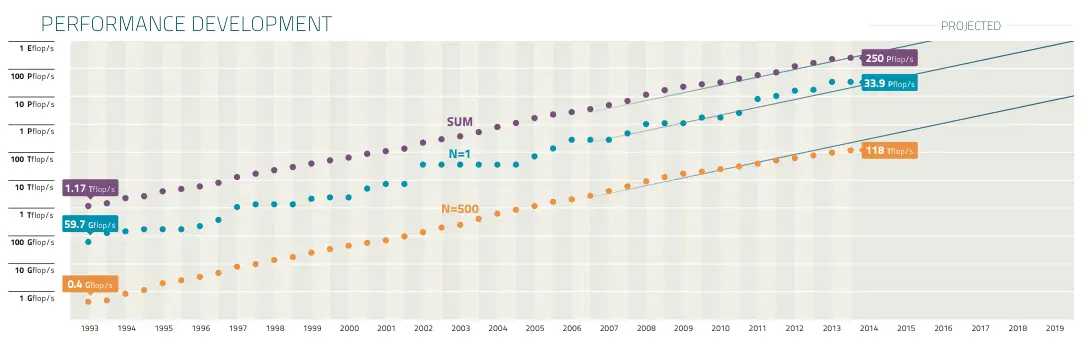
Tianhe-2, a Chinese supercomputer, has retained its position as the world's no. 1 system with 33.86 petaflop/s (quadrillions of calculations per second) on the Linpack benchmark – according to the latest TOP500 list of the world's most powerful supercomputers.

The 42nd edition of the twice-yearly TOP500 list was announced yesterday at the SC13 conference in Denver, Colorado. While a typical desktop PC has four cores, Tianhe-2 (which means “Milky Way 2”) features 3,120,000 – each using Intel's "Ivy Bridge" 22 nanometre processors. It has 1,024,000 gigabytes of random-access memory (RAM), 12.4 petabytes of storage space and needs 17,800 kilowatts (kW) of electricity to work. Including external cooling, it requires 24,000 kW. The entire complex occupies 720 square metres of floor space and costs 2.4 billion Yuan (US$390 million).

China’s National University of Defence Technology (NUDT) – which developed Tianhe-2 – says it will be offered as a "research and education" tool once tests are completed. Local reports suggest that the car industry is a "priority" client, so it may be useful in complex engine simulations, for example, or devising new materials and more efficient components.

Titan – installed at the U.S. Department of Energy’s (DOE) Oak Ridge National Laboratory – remains the no. 2 system, achieving 17.59 petaflop/s on the Linpack benchmark. Titan is among the most energy efficient systems on the list, consuming a total of 8.21 MW of electrical power and delivering 2.14 gigaflops per watt, compared to 1.9 for Tianhe-2.

Sequoia, an IBM BlueGene/Q system installed at the DOE’s Lawrence Livermore National Laboratory, is the no. 3 system. First delivered in 2011, Sequoia reached 17.17 petaflop/s on the Linpack benchmark.

In all, there are 31 systems with performance greater than a petaflop/s on the list, an increase of five compared to the June 2013 list. Intel continues to provide the processors for the largest share (82.4 percent) of TOP500 systems.

Although China holds the no.1 spot, the U.S. is clearly the leading consumer of supercomputers, with 265 of the top 500 systems (253 last time). The European share (102 systems compared to 112 last time) is still lower than the Asian share (115 systems, down from 118 last time).

Like many forms of information technology, the growth of supercomputing power has followed a remarkably smooth and consistent trend. As shown in the graph below, we can expect to see the first exaflop machine by 2019. An exaflop is 1,000,000,000,000,000,000 (a million trillion, or a quintillion) calculations per second. Such computing power will be invaluable to researchers – providing faster and more accurate simulations of climate, weather, astrophysics, genetics, molecular dynamics and many other processes. Zettaflop machines could emerge by 2030.

The current list can be viewed at TOP500.org with an Excel version available too.

Engineers make world's smallest FM radio

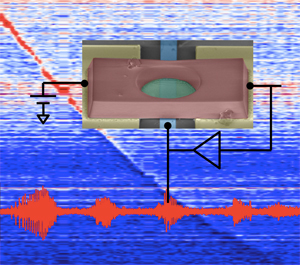
A team at the University of Columbia has taken advantage of graphene's special properties – its mechanical strength and electrical conduction – to create a nano-mechanical system producing FM signals, in effect the world's smallest FM radio transmitter. The study is published in Nature Nanotechnology.

“This work is significant in that it demonstrates an application of graphene that cannot be achieved using conventional materials,” said Mechanical Engineering Professor James Hone, who led the study. “And it’s an important first step in advancing wireless signal processing and designing ultrathin, efficient cell phones. Our devices are much smaller than any other sources of radio signals, and can be put on the same chip that’s used for data processing.”

Graphene – a single atomic layer of carbon – is the strongest material known to man, and also has electrical properties superior to the silicon found in modern electronics. The combination of these properties makes graphene an ideal material for nano-electromechanical systems (NEMS), which are scaled-down versions of the micro-electromechanical systems (MEMS) used widely for sensing of vibration and acceleration. For example, Hone explains, MEMS sensors figure out how your smartphone or tablet is tilted to rotate the screen.

In this new study, Hone’s team took advantage of graphene’s mechanical ‘stretchability’ to tune the output frequency of their custom oscillator – producing a nano-mechanical version of a component known as a voltage controlled oscillator (VCO). With a VCO, explained Hone, it is easy to generate a frequency-modulated (FM) signal – exactly what is used for FM radio broadcasting. The team built a graphene NEMS whose frequency was 100 megahertz, which lies right in the middle of the FM radio band (87.7 to 108 MHz). They used low-frequency music signals (both pure tones and songs from an iPhone) to modulate the 100 MHz carrier signal from the graphene, and then retrieved the musical signals again using an ordinary FM radio receiver.

“This device is by far the smallest system that can create such FM signals,” says Hone.

While graphene NEMS will not be used to replace conventional radio transmitters, they have many applications in wireless signal processing. Electrical Engineering Professor Kenneth Shepard: “Due to the continuous shrinking of electrical circuits known as ‘Moore’s Law’, today’s cell phones have more computing power than systems that used to occupy entire rooms. However, some types of devices, particularly those involved in creating and processing radio-frequency signals, are much harder to miniaturise. These ‘off-chip’ components take up a lot of space and electrical power. In addition, most of these components cannot be easily tuned in frequency, requiring multiple copies to cover the range of frequencies used for wireless communication.”

Graphene NEMS can address both problems: they are very compact and easily integrated with other types of electronics, and their frequency can be tuned over a wide range, because of graphene’s tremendous mechanical strength.     

“There is a long way to go toward actual applications in this area,” notes Hone, “but this work is an important first step. We are excited to have demonstrated successfully how this wonder material can be used to achieve a practical technological advancement – something particularly rewarding to us as engineers.”

Hone and Shepard are now working on improving the performance of the graphene oscillators to have lower noise. At the same time, they are also trying to demonstrate integration of graphene NEMS with silicon integrated circuits, making the oscillator design even more compact.

How to Keep to a Daily Schedule

Learning how to balance the different obligations in your life can be challenging. Work, school and daily chores can pile up, while friends or family ask you for help. It’s also important to spend some time on self-care. When you keep a daily schedule, these tasks seem more manageable. By designing a schedule, you can balance short-term and long-term goals. This will help you prioritize what’s important in your life.

Read More